
B12 Shots and Your Lab Results: How to Read the Numbers Before Deciding

Vitamin B12 injections are often marketed as "energy shots," as if anyone feeling tired would benefit. B12 is a nutrient, not a stimulant, and whether you need more of it is a question a blood test can help answer. This guide explains the tests providers use, what the results mean, and what can throw them off, so you can have an informed conversation before starting. It is educational and does not replace medical advice.
Test 1: Serum vitamin B12
What it measures. The total amount of B12 circulating in your blood.
How results are usually read. Laboratories set their own ranges, so use the one printed on your report. As a general guide, a result below about 200 pg/mL is considered low, between 200 and 300 is borderline, and above 300 is usually considered adequate.
Its limits. This test measures B12 in the blood, not how well your cells are using it. A borderline result does not settle the question either way, which is why a second test is often added.
Test 2: Methylmalonic acid (MMA)
What it measures. A substance that builds up when cells do not have enough B12 to work with.
How results are read. A raised MMA level alongside a low or borderline B12 result supports a diagnosis of deficiency.
Its limits. Reduced kidney function can raise MMA for unrelated reasons.
Test 3: Homocysteine
What it measures. An amino acid that the body processes with the help of B12 and folate.
How results are read. It tends to rise when either B12 or folate is low.
Its limits. It is less specific than MMA. Low folate, kidney disease, thyroid problems, and some medications also raise it.
Test 4: Complete blood count
What it measures. The number, size, and appearance of your blood cells.
How results are read. Low B12 can cause red blood cells to become larger than normal, shown as a raised MCV value, and can lead to anemia.
Its limits. Many people with low B12 have a normal blood count, especially early on. Taking folic acid can also keep the blood count normal while a B12 problem continues.
Tests that look for the cause
If deficiency is confirmed, a provider may look for the reason. This can include antibody tests for pernicious anemia, a condition in which the body cannot absorb B12 properly, along with a review of diet, medications, and digestive history.
Things that can distort your results
- Recent B12 supplements or injections. They raise the blood level and can hide a deficiency. Tell your provider what you have taken and when.
- Biotin supplements. High doses can interfere with some lab methods. Ask whether to pause them before testing.
- Folic acid. As noted, it can mask blood changes.
- Pregnancy and some hormonal medications. These can lower measured levels.
- Certain medications. Long-term metformin and acid-reducing drugs are associated with lower B12.
For the clearest picture, test before starting any B12 product.
What different results may lead to
Clearly low. A provider will usually look for the cause and discuss how to replace B12, which may be by mouth or by injection depending on why it is low.
Borderline. Additional testing, such as MMA, helps decide. Symptoms and risk factors are weighed as well.
Normal. Your symptoms most likely have another explanation. Tiredness has many causes, including poor sleep, low iron, thyroid conditions, depression, and medication side effects, and these deserve their own evaluation.
About B12 injections
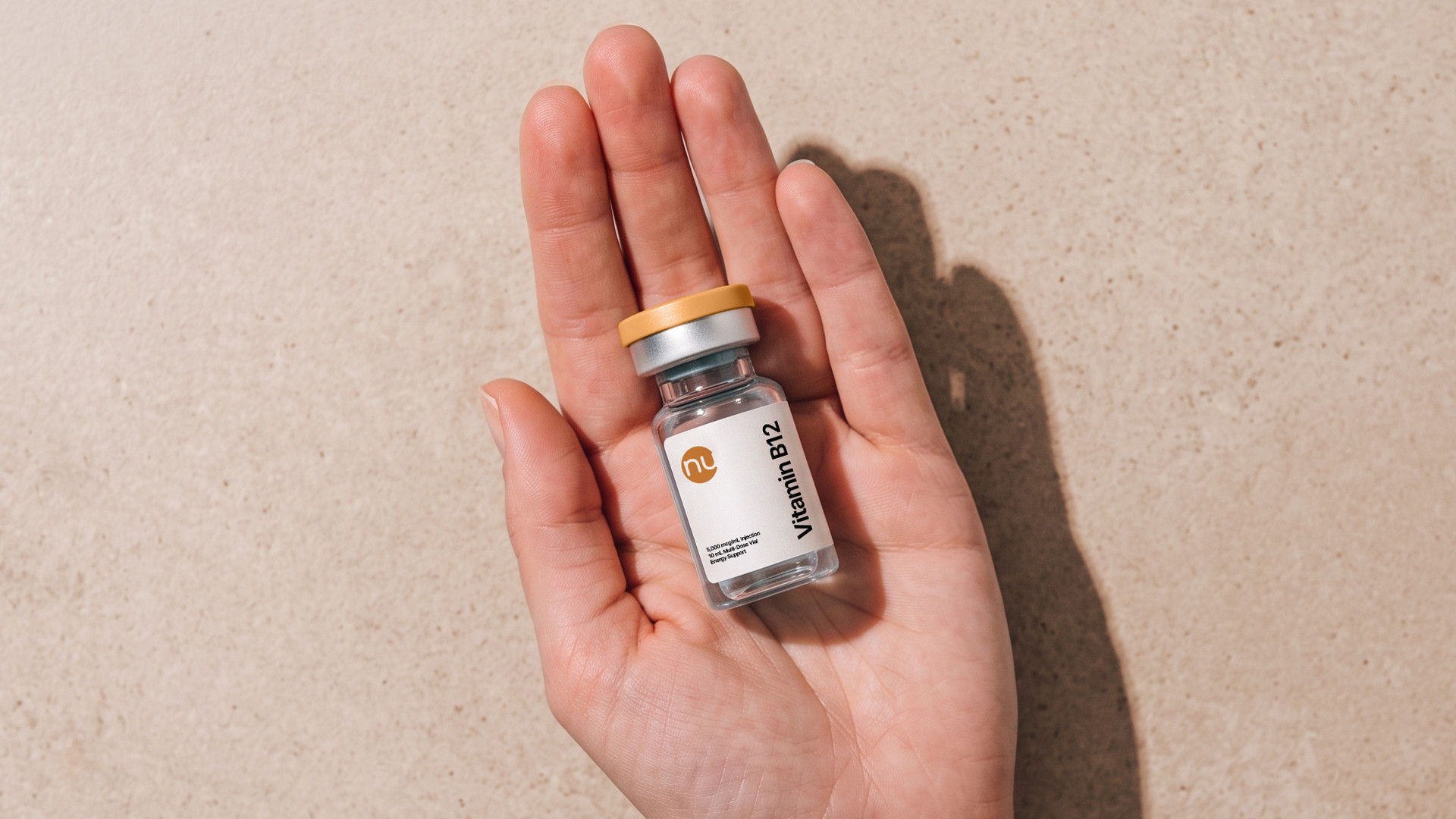
Injections are prescription products that deliver B12 into muscle or under the skin, bypassing the digestive system. Providers generally consider them when absorption from the gut is impaired or a deficiency needs prompt correction.
B12 injections prescribed through Nu Image are compounded medications. Compounded medications are not FDA-approved and have not been reviewed by the FDA for safety, effectiveness, or quality.
Questions to ask your provider
- Which tests have I had, and what were the results?
- Is my result low, borderline, or normal for this laboratory?
- Do I need an MMA test to clarify it?
- If I am low, what is the likely cause?
- When should my levels be rechecked?
Getting an evaluation
Nu Image offers online evaluations with licensed providers, who review your health information, symptoms, and any lab results before deciding whether a B12 plan is appropriate.
This content is for educational purposes only and is not medical advice, diagnosis, or treatment. Reference ranges vary by laboratory. Compounded medications are prepared by state-licensed compounding pharmacies and are not reviewed or approved by the FDA for safety, efficacy, or quality. Prescription products require an online consultation with a licensed healthcare provider, who will determine whether a prescription is appropriate.
This article is for informational purposes only and does not constitute medical advice. The information contained herein is not a substitute for and should never be relied upon for professional medical advice. Always talk to your physician about the risks and benefits of any treatment. Nu Image Medical may not offer the medications or services mentioned in this article.