8 Nutrient-Dense Evening Snacks for Satiety and Sleep Support

8 Nutrient-Dense Evening Snacks for Satiety and Sleep Support
Late-night eating is frequently characterized as an automatic dietary obstacle. While consuming large, carbohydrate-dense meals directly before sleep elevates core body temperature and impairs nocturnal metabolic processing, going to bed experiencing genuine physiological hunger can provoke nocturnal cortisol surges that fragment sleep.
When evening nourishment is required, the goal is not caloric indulgence, but endocrine stabilization. Selecting small, nutrient-dense portions anchored by slow-digesting protein, essential micronutrients, and healthy lipids prevents nocturnal hypoglycemia, blunts ghrelin signaling, and protects restorative slow-wave sleep without disrupting circadian rhythms.
The Endocrinology of Nocturnal Satiety and Glycemia
During evening hours, peripheral insulin sensitivity naturally decreases as melatonin levels rise in preparation for sleep. Ingesting refined starches or added sugars close to bedtime results in prolonged postprandial glucose elevations followed by reactive drops that can trigger middle-of-the-night awakenings.
Conversely, consuming small amounts of bioavailable protein rich in tryptophan or micellar casein provides a steady stream of amino acids that supports neurotransmitter synthesis and sustained satiety through the night.
1. High-Purity Whey Isolate or Micellar Casein Shake
An unsweetened protein shake mixed with water or unsweetened almond milk provides clean amino acids without excess caloric burden. Micellar casein is particularly advantageous before bed because it forms a gentle gel in the stomach, releasing amino acids slowly over several hours. This sustained release supports nighttime tissue recovery while keeping hunger hormones subdued.
2. Fresh or Tart Montmorency Cherries
Montmorency tart cherries are one of the few natural dietary sources of phytomelatonin and proanthocyanidins. Melatonin coordinates the body's sleep-wake cycle, while the polyphenols in tart cherries assist in reducing oxidative stress. A modest serving of tart cherries delivers these bioactive compounds with a gentle glycemic footprint.
3. Low-Moisture Part-Skim String Cheese
Part-skim mozzarella string cheese offers a pre-portioned combination of high-density protein and dietary fat. Providing roughly seven grams of complete protein per serving with negligible carbohydrates, it delivers calcium and casein without requiring preparation or stimulating blood sugar volatility.
4. Cultured Low-Fat Cottage Cheese
Cottage cheese is exceptionally rich in slow-digesting casein protein, providing over 12 grams of protein per half-cup serving. It also contains bioavailable glutamine and essential minerals. Pairing plain cottage cheese with a light dusting of Ceylon cinnamon or a few fresh raspberries creates a satisfying, blood-sugar-stabilizing evening option.
5. Measured Raw Almonds
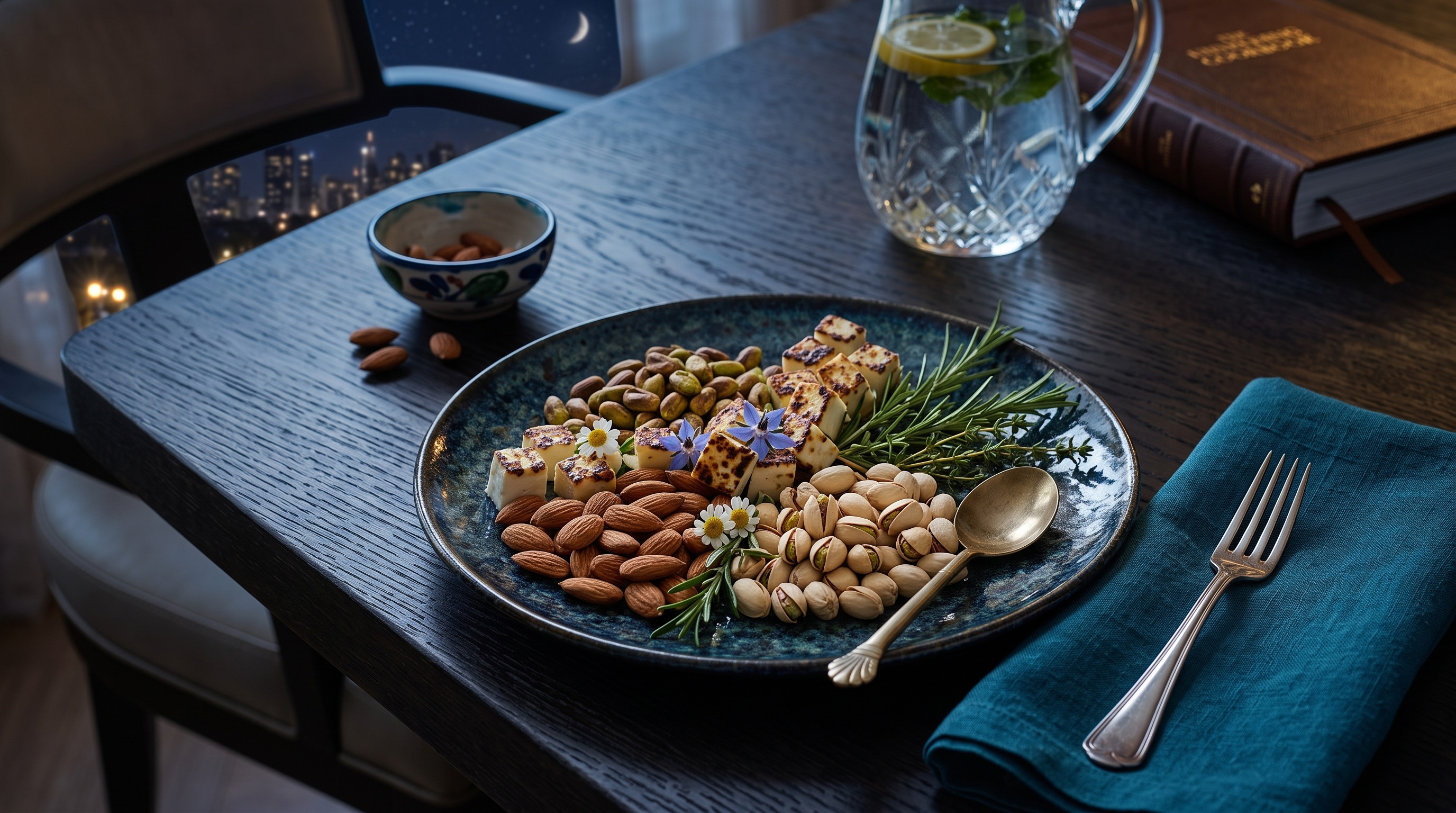
Almonds provide monounsaturated oleic acid, plant-based protein, and bioavailable magnesium. Magnesium plays an essential role in neuromuscular relaxation and modulates the central nervous system by supporting GABA receptor function. Limit portion size to roughly one ounce (about 20 to 22 almonds) to manage caloric density while obtaining satiety-promoting lipids.
6. Shelled Raw Pistachios
Pistachios offer a balanced macronutrient profile consisting of healthy fats, fiber, and protein, alongside naturally occurring melatonin, vitamin B6, and lutein. Measuring a small portion provides a satisfying crunch and steady micronutrient delivery that supports evening satiety.
7. High-Percentage Dark Chocolate (85%+)
A small square (roughly 10 to 15 grams) of dark chocolate containing 85% cocoa or higher satisfies evening cravings with minimal sugar impact. Cocoa is concentrated in polyphenolic flavanols, epicatechin, and trace minerals that support vascular tone. The sensory intensity of high-percentage dark chocolate naturally curbs the impulse to continue grazing.
8. Hard-Boiled Pasture-Raised Eggs
Whole eggs represent a gold standard for protein bioavailability. A single hard-boiled egg provides approximately six grams of protein containing all nine essential amino acids, along with choline and yolk lipids, for fewer than 80 calories. Its protein-to-energy ratio makes it one of the most efficient, hunger-blunting evening choices available.
General Principles for Evening Nutrition
-
Prioritize True Hunger Over Emotional Decompression: Differentiate physiological hunger from habitual snacking driven by boredom, screen fatigue, or stress decompression.
-
Observe a 60-to-90-Minute Pre-Sleep Buffer: Consume any evening snack at least an hour before reclining to facilitate initial gastric emptying and minimize the risk of acid reflux.
-
Keep Portions Measured: Evening snacks should remain under 150 to 200 calories to provide targeted amino acid delivery without overburdening digestive organs during sleep.
When Evening Cravings Encounter Metabolic Resistance
Utilizing targeted evening nutrition supports healthy sleep and daytime energy balance. However, when uncontrollable late-night appetite, severe visceral adiposity, or persistent weight retention continue despite structured lifestyle habits, deeper endocrine adaptations—such as clinical insulin resistance, leptin desensitization, or HPA axis dysregulation—may be resisting your efforts.
When dietary adjustments reach a physiological plateau, clinical diagnostic evaluation provides actionable answers. Explore Nu Image Medical Weight Loss Programs to learn how comprehensive metabolic testing, licensed telehealth consultations, and medically supervised clinical protocols work synergistically to restore neuroendocrine balance and long-term metabolic vitality.
Disclaimer: This content is provided solely for educational and informational purposes and does not constitute medical advice, diagnosis, or treatment. It is not intended to replace personalized consultation with a licensed healthcare provider. Always consult your physician before initiating significant modifications to your diet, exercise, or health regimen.
This article is for informational purposes only and does not constitute medical advice. The information contained herein is not a substitute for and should never be relied upon for professional medical advice. Always talk to your physician about the risks and benefits of any treatment. Nu Image Medical may not offer the medications or services mentioned in this article.