
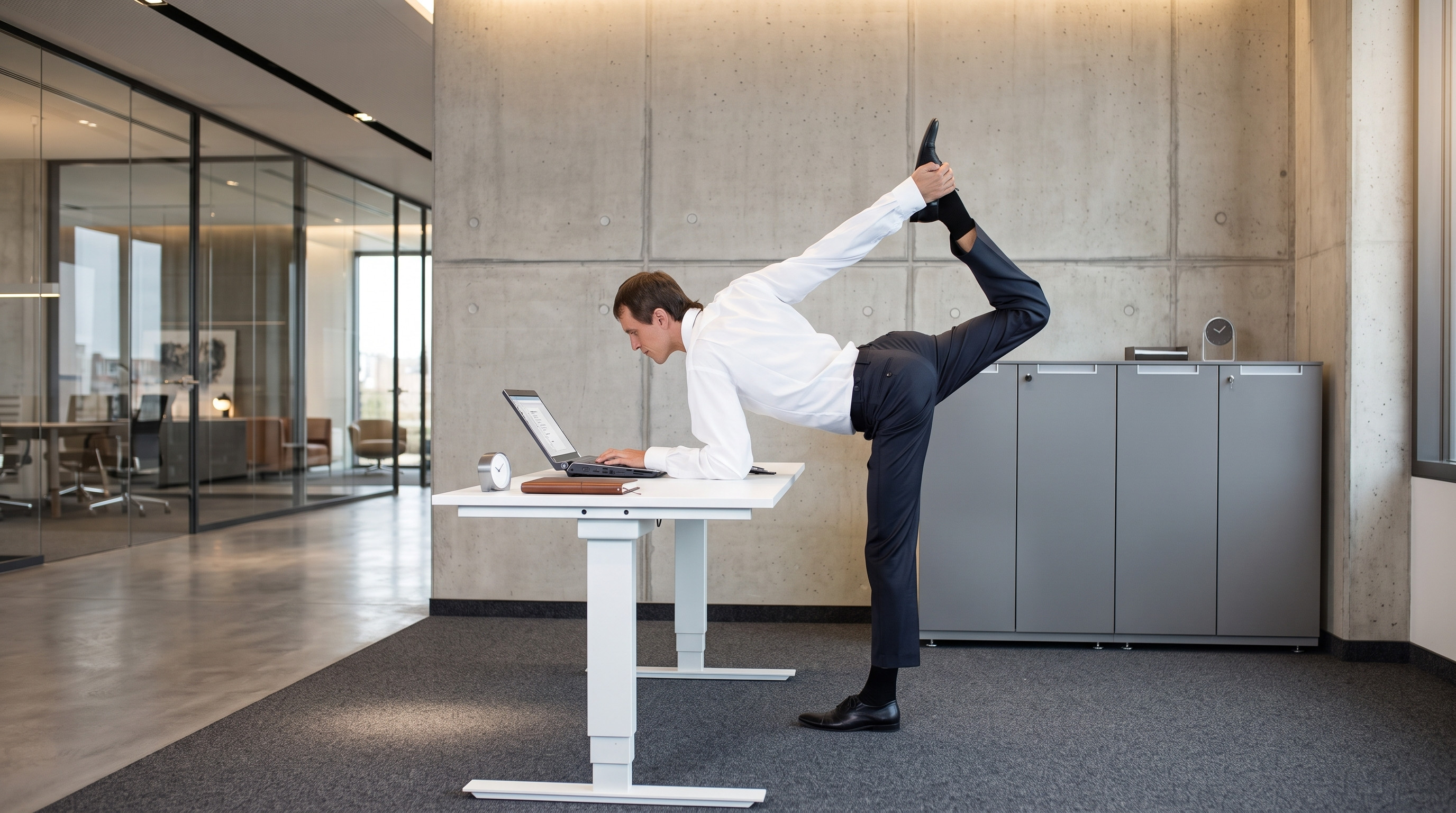
Occupational Ergonomics and Sedentary Physiology: Isometric Mobility and NEAT Optimization

Occupational Ergonomics and Sedentary Physiology: Isometric Mobility and NEAT Optimization
Prolonged seated posture has emerged as a pervasive occupational health challenge in modern sedentary work environments. Sustained immobilization at a desk or workstation suppresses basal non-exercise activity thermogenesis (NEAT), decreases lower-extremity microvascular shear stress, and induces progressive structural shortening in anterior myofascial chains.
Compensating for eight or more hours of uninterrupted physical inactivity with a single evening workout cannot entirely reverse prolonged seated metabolic stasis. Incorporating calibrated micro-mobility drills, postural resets, and isometric contractions throughout the workday preserves musculoskeletal alignment, facilitates peripheral venous return, and maintains baseline metabolic signaling.
The Pathophysiology of Sustained Seated Posture
Remaining seated for multi-hour blocks triggers specific physiological adaptations:
-
Suppression of Skeletal Muscle Lipoprotein Lipase (LPL): Muscular inactivity within large postural muscle groups dramatically suppresses local LPL activity, reducing the rate at which circulating triglycerides and free fatty acids are cleared from the bloodstream.
-
Venous Pooling and Endothelial Shear Decline: The absence of active skeletal muscle pumping in the calves leads to venous pooling in the lower extremities, lowering shear stress along the vascular endothelium and reducing localized nitric oxide synthesis.
-
Adaptive Myofascial Shortening: Sustained 90-degree hip flexion promotes adaptive tonic shortening of the psoas major and rectus femoris complexes, contributing to posterior pelvic destabilization, gluteal amnesia, and secondary mechanical strain on the lumbar spine.
Evidence-Based Intra-Day Postural and Mobility Protocols
Integrating micro-interventions into desk workflows provides mechanical relief and stimulates neuromuscular tone without requiring specialized athletic equipment:
1. Scapular Retraction and Thoracic Decompression
Prolonged typing fosters protracted shoulders, internal humeral rotation, and thoracic kyphosis.
-
Sit upright with the pelvis neutral and the abdominal wall lightly braced.
-
Depress the clavicles away from the cervical spine, drawing the scapulae backward and downward toward the spine.
-
Hold an active isometric squeeze of the rhomboids and mid-trapezius for 5 seconds, followed by controlled release. Perform 8 to 10 repetitions to open anterior chest structures.
2. Seated Quadriceps and Hamstring Activation
Maintaining knee extension counteracts static joint stiffness and encourages local circulation.
-
From an upright seated position, slowly extend one leg horizontally until the knee achieves full terminal extension.
-
Flex the ankle into dorsiflexion, contracting the quadriceps femoris forcefully for 2 to 3 seconds.
-
Lower under control and alternate sides for 12 to 15 deliberate repetitions.
3. Plantar Fascia and Intrinsic Foot Mobilization
Encasing feet in rigid footwear during prolonged sitting limits natural sensory feedback and immobilizes the plantar aponeurosis.
-
Place a firm density ball beneath the medial arch of the foot.
-
Apply moderate downward axial pressure, rolling slowly from the metatarsal heads back toward the calcaneus for 60 to 90 seconds per side.
-
This stimulates local mechanoreceptors, releases tension along the posterior superficial line, and alleviates tension associated with early plantar irritation.
Environmental Strategies to Elevate Daily Energy Expenditure
-
Transition Between Sitting and Standing: Alternating between a seated workstation and a standing desk every 45 to 60 minutes engages the postural soleus and spinal erectors, maintaining metabolic throughput.
-
Incorporate Walking Meetings: Replace passive virtual or seated check-ins with low-intensity ambulation. Low-intensity walking stimulates insulin-independent glucose clearance via skeletal muscle contractions.
-
Practice Micro-Breaks for Eye and Neck Strain: Adhere to regular intervals of shifting visual focal length into the distance while performing gentle axial cervical retractions to offset sustained forward-head posturing.
When Physical Discipline Encounters Systemic Exhaustion
Implementing proactive workplace ergonomics, optimizing daily NEAT, and performing targeted mobility breaks establishes an indispensable baseline for structural health. However, when persistent brain fog, chronic afternoon fatigue, or profound physical sluggishness continue despite regular movement and ergonomic adjustments, deeper cellular energy constraints—such as compromised mitochondrial efficiency or micronutrient depletion—may require clinical evaluation.
When workplace modifications alone are insufficient to overcome systemic fatigue, advanced clinical medicine provides targeted support. Explore Nu Image Medical Energy & Vitality Programs to discover how comprehensive medical diagnostics, licensed telehealth consultations, and physician-supervised protocols work synergistically to restore cellular metabolism, optimize systemic recovery, and elevate everyday performance.
Disclaimer: This content is provided solely for educational and informational purposes and does not constitute medical advice, diagnosis, or treatment. It is not intended to replace personalized consultation with a licensed healthcare provider. Always consult your physician before initiating significant modifications to your physical exercise regimen or managing chronic occupational musculoskeletal strain.
This article is for informational purposes only and does not constitute medical advice. The information contained herein is not a substitute for and should never be relied upon for professional medical advice. Always talk to your physician about the risks and benefits of any treatment. Nu Image Medical may not offer the medications or services mentioned in this article.


.webp)
.webp)