10 Nutrient-Dense Snacks That Support Satiety and Metabolic Health

10 Nutrient-Dense Snacks That Support Satiety and Metabolic Health
Snacking plays a strategic role in maintaining metabolic balance throughout a demanding day. However, persistent fitness myths often promise that specific foods can selectively melt or "burn" abdominal fat. In human physiology, targeted spot reduction of fat tissue is biologically impossible through diet alone; fat oxidation occurs systemically as overall energy balance is maintained.
Rather than relying on hyper-processed "diet" snack bars that trigger steep glucose spikes and rapid hunger rebound, prioritizing whole, nutrient-dense foods supports natural satiety peptides and baseline metabolic efficiency. Choosing foods rich in bioavailable protein, viscous dietary fiber, and healthy monounsaturated fats stabilizes daily energy and helps prevent reactive evening overeating.
The Science of Satiety-Focused Nutrition
Effective snacks support metabolic wellness by slowing gastrointestinal transit and blunting sharp postprandial glucose swings. Combining slow-digesting dietary protein with dietary fiber stimulates fullness hormonesâsuch as glucagon-like peptide-1 (GLP-1) and peptide YY (PYY)âwhile down-regulating ghrelin, the primary appetite-stimulating hormone.
1. Plain Greek Yogurt (High-Biological Protein & Probiotics)
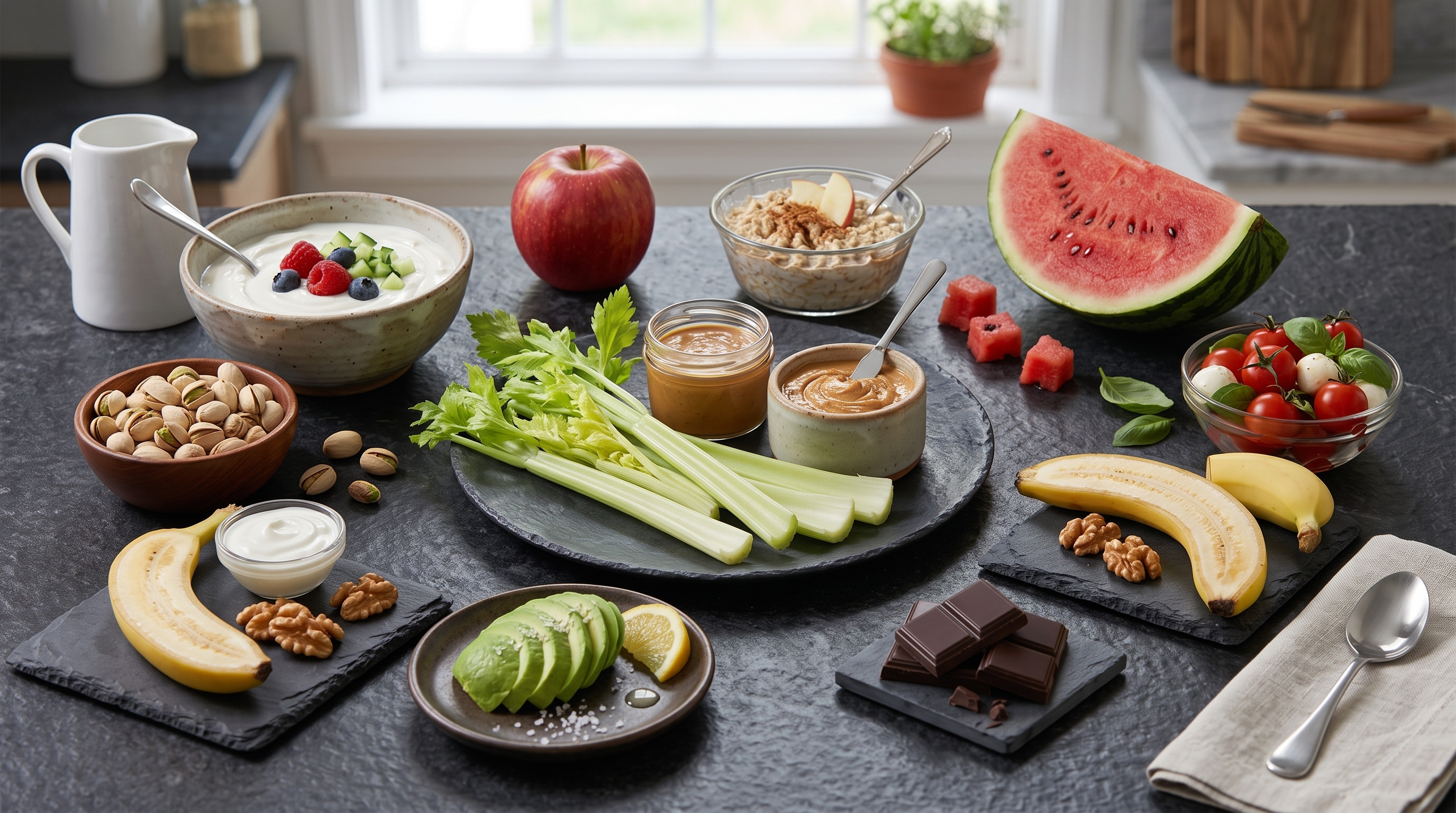
Plain Greek yogurt undergoes traditional straining that removes liquid whey, concentrating its protein content to nearly double that of conventional yogurts while significantly lowering natural sugars. It provides sustained-release micellar casein protein alongside live probiotic cultures that support gut barrier integrity. Pairing it with fresh berries or diced cucumbers creates a satisfying savory or mildly sweet snack.
2. Raw Pistachios (Balanced Lipids & Viscous Fiber)
Pistachios offer a balanced matrix of plant-based protein, dietary fiber, and healthy monounsaturated and polyunsaturated fatty acids. Purchasing in-shell pistachios encourages mindful eating by slowing consumption, while their micronutrient profile supplies bioavailable vitamin B6, copper, and potassium.
3. Crisp Celery with Natural Nut Butter
Celery is naturally high in water volume, insoluble fiber, and potassium, providing crisp texture with minimal caloric load. Pairing celery stalks with one measured tablespoon of natural almond or peanut butter delivers healthy lipids that prolong gastric emptying, turning a low-density vegetable into a balanced, satisfying bridge between meals.
4. Steel-Cut or Rolled Oats (Beta-Glucan Soluble Fiber)
Oatmeal is an excellent source of beta-glucan, a viscous soluble fiber that forms a gel-like matrix in the digestive tract. This slows carbohydrate absorption, blunts postprandial insulin surges, and supports healthy gut microbiota. Enjoying a small portion of overnight oats prepared with unsweetened almond milk and cinnamon provides steady daytime energy.
5. Fresh Watermelon (Hydration & Lycopene)
Watermelon is composed of roughly 92% water, providing high dietary volume with low caloric density. It delivers citrulline, an amino acid involved in nitric oxide synthesis, alongside the antioxidant carotenoid lycopene. Consuming a measured serving satisfies sweet cravings while supporting cellular hydration.
6. Fresh Avocado (Heart-Healthy Oleic Acid)
Avocados are uniquely composed of monounsaturated oleic acid and soluble fiber with negligible sugar. This lipid-fiber combination delays gastrointestinal emptying, promoting prolonged feelings of fullness. Pairing a quarter of an avocado with a pinch of sea salt or lemon juice delivers steady satiety.
7. Fresh Tomatoes with Bocconcini (Lycopene & Protein)
Tomatoes are packed with vitamin C, potassium, and lycopene. Layering fresh tomato slices with fresh basil and small bocconcini (part-skim mozzarella balls) combines fresh acidity with bioavailable dairy protein and calcium, creating a balanced savory snack.
8. Moderate Banana Portions Paired with Protein
Bananas deliver easily digestible complex carbohydrates and potassium, which supports cellular fluid balance. To moderate carbohydrate absorption and prevent rapid blood glucose shifts, always pair half a banana with a protein or fat source, such as Greek yogurt or a few raw walnuts.
9. Natural Peanut Butter (Plant Lipids & Satiety)
Natural peanut butter containing only roasted peanuts and salt provides dense monounsaturated fats and plant protein. Its dense texture and slow digestion help blunt appetite spikes. Keeping portions measured to one or two tablespoons ensures high satiety within overall daily energy goals.
10. High-Percentage Dark Chocolate (Polyphenols & Flavanols)
Dark chocolate containing 70% to 85% cocoa solids is rich in polyphenolic flavanols that support vascular endothelial function. A single square provides deep, rich flavor and moderate healthy fats, satisfying cravings for sweetness without triggering the glycemic spikes of conventional milk chocolate.
When Mindful Nutrition Encounters Metabolic Hurdles
Building a consistent routine around whole, nutrient-dense foods establishes an indispensable daily foundation. However, when persistent weight retention, stubborn visceral fat, or unyielding metabolic resistance persist despite disciplined nutrition, underlying endocrine adaptationsâsuch as insulin resistance, thyroid variations, or leptin resistanceâmay be stalling progress.
When standard dietary adjustments reach a physiological plateau, clinical medical evaluation provides targeted clarity. Explore Nu Image Medical Weight Loss Programs to learn how comprehensive lab panels, licensed telehealth consultations, and medically supervised clinical protocols work synergistically to support lasting metabolic balance.
Â
Disclaimer: This content is provided solely for educational and informational purposes and does not constitute medical advice, diagnosis, or treatment. It is not intended to replace consultation with a licensed healthcare provider. Always consult your physician before initiating significant modifications to your nutritional regimen.
This article is for informational purposes only and does not constitute medical advice. The information contained herein is not a substitute for and should never be relied upon for professional medical advice. Always talk to your physician about the risks and benefits of any treatment. Nu Image Medical may not offer the medications or services mentioned in this article.